
Shoreline Protection
Rip-Rap
DelDOT-rated stone, sized to the exposure, that takes the energy out of waves and wake before it reaches your soil.
“I’m losing a foot of yard a year.”
Rip-rap is one of the oldest ways to hold a shoreline and still one of the most dependable. Hastings Marine Construction has been placing stone on Delmarva shorelines for more than four decades, from residential waterfronts to larger stabilization work.
It is deceptively simple. Site preparation, filtration, stone selection, grading and placement are what separate a revetment that stays where it was put from one that migrates down the bank.
What a rip-rap revetment is
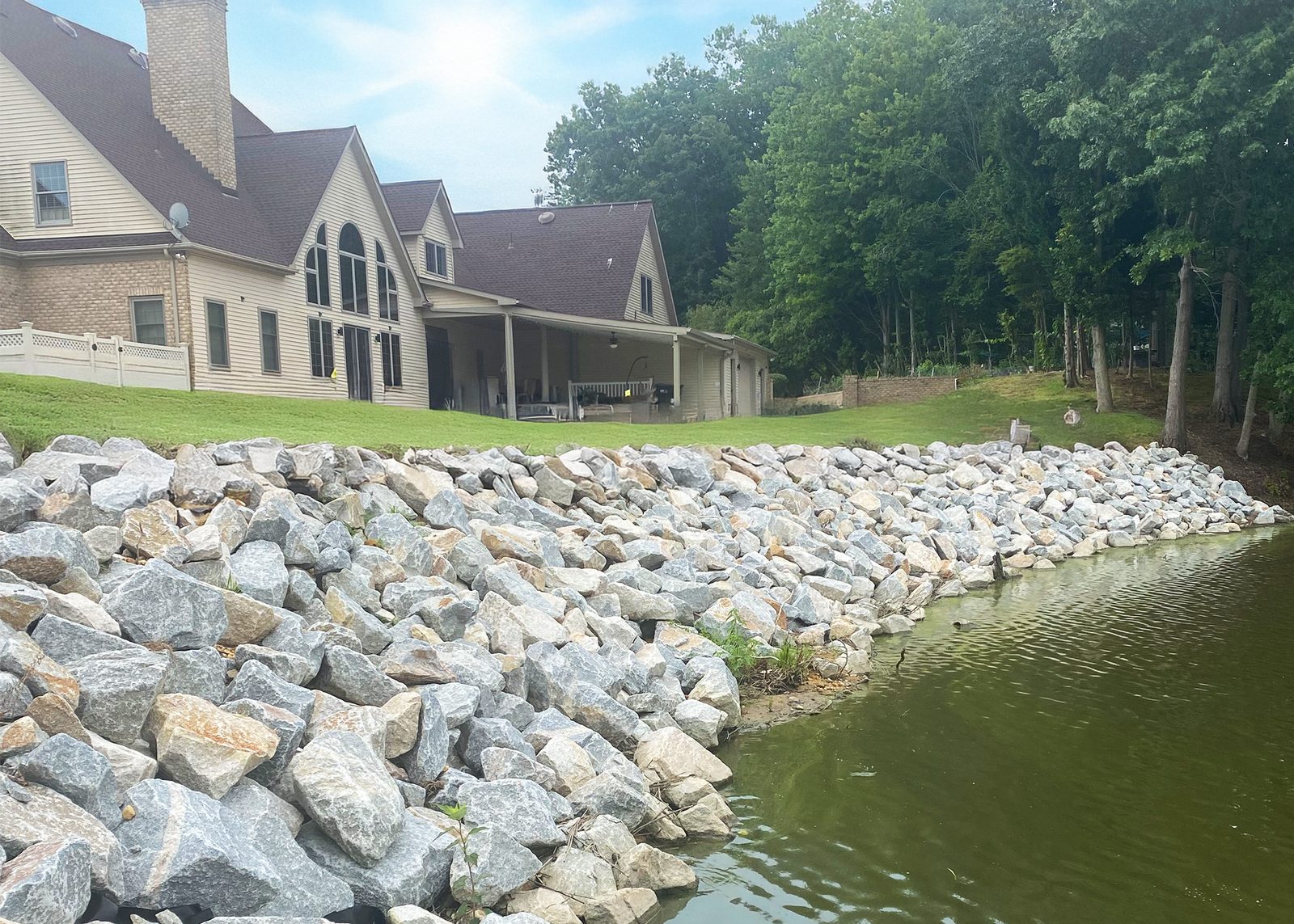
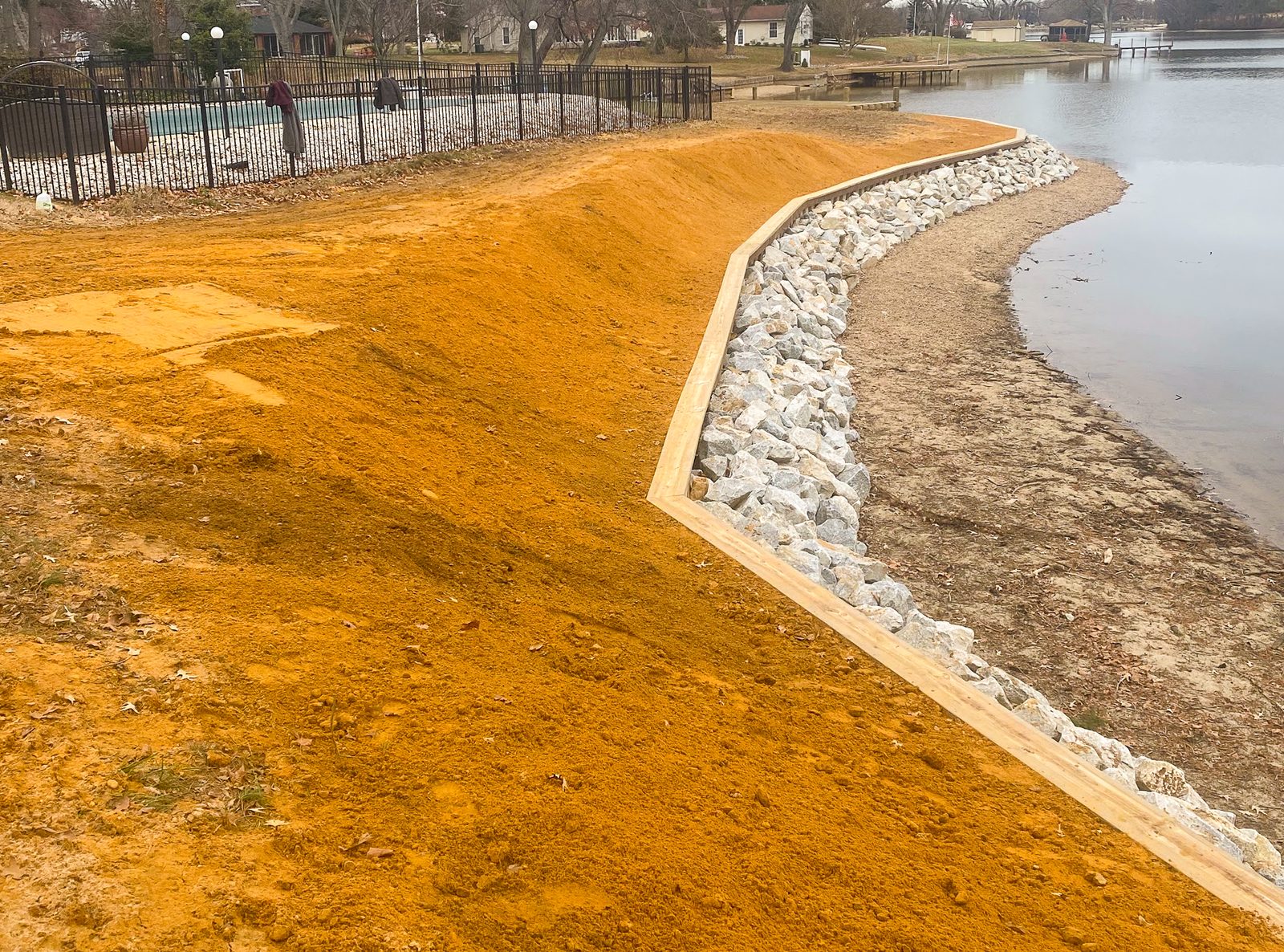
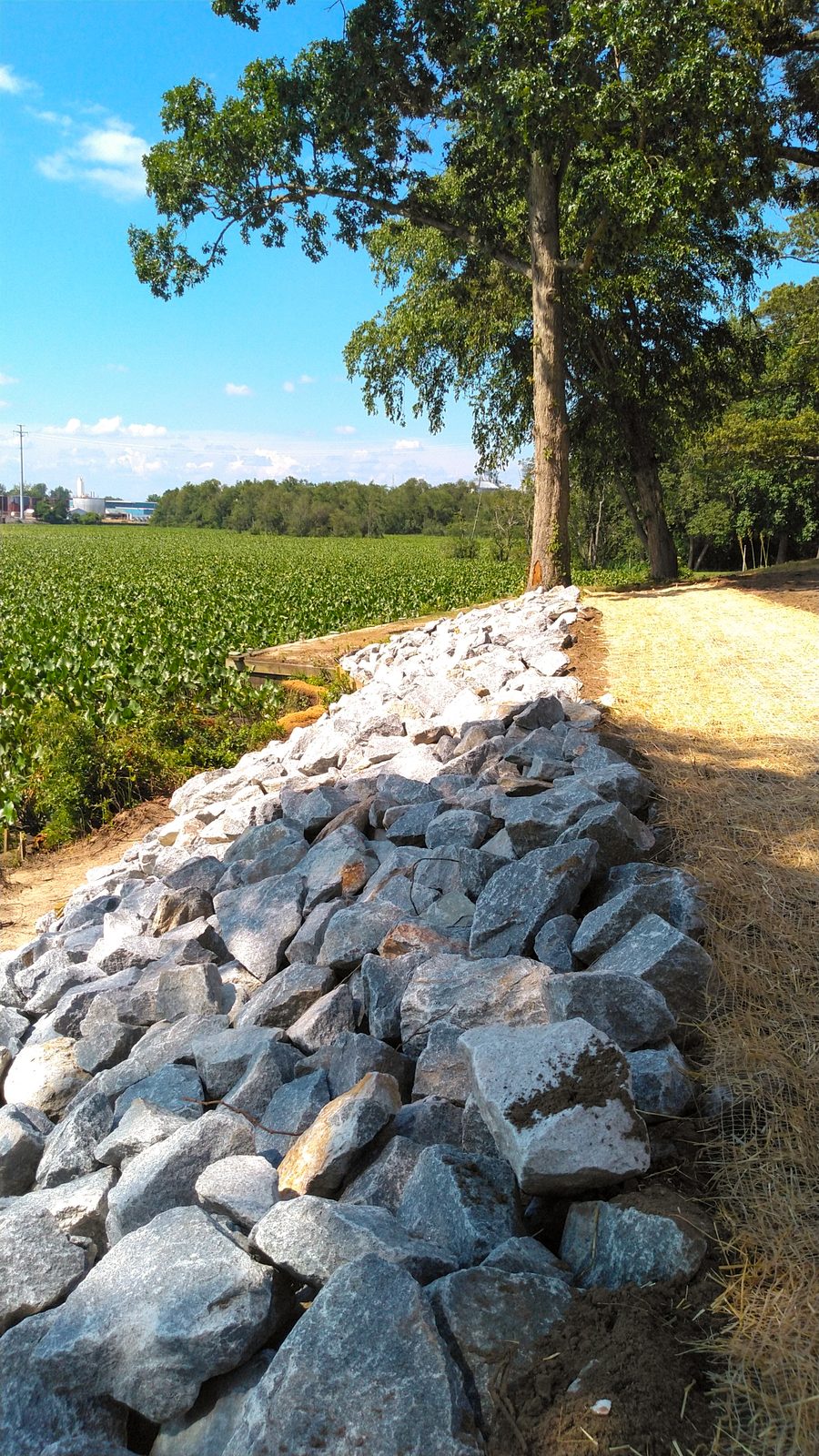
A revetment is a sloped layer of armor stone laid against the shoreline itself. Placed to suit the site’s exposure, soil and water conditions, it absorbs and deflects wave energy instead of letting it work on your soil — and it ages into the property rather than standing out from it.
Stone selected for the exposure
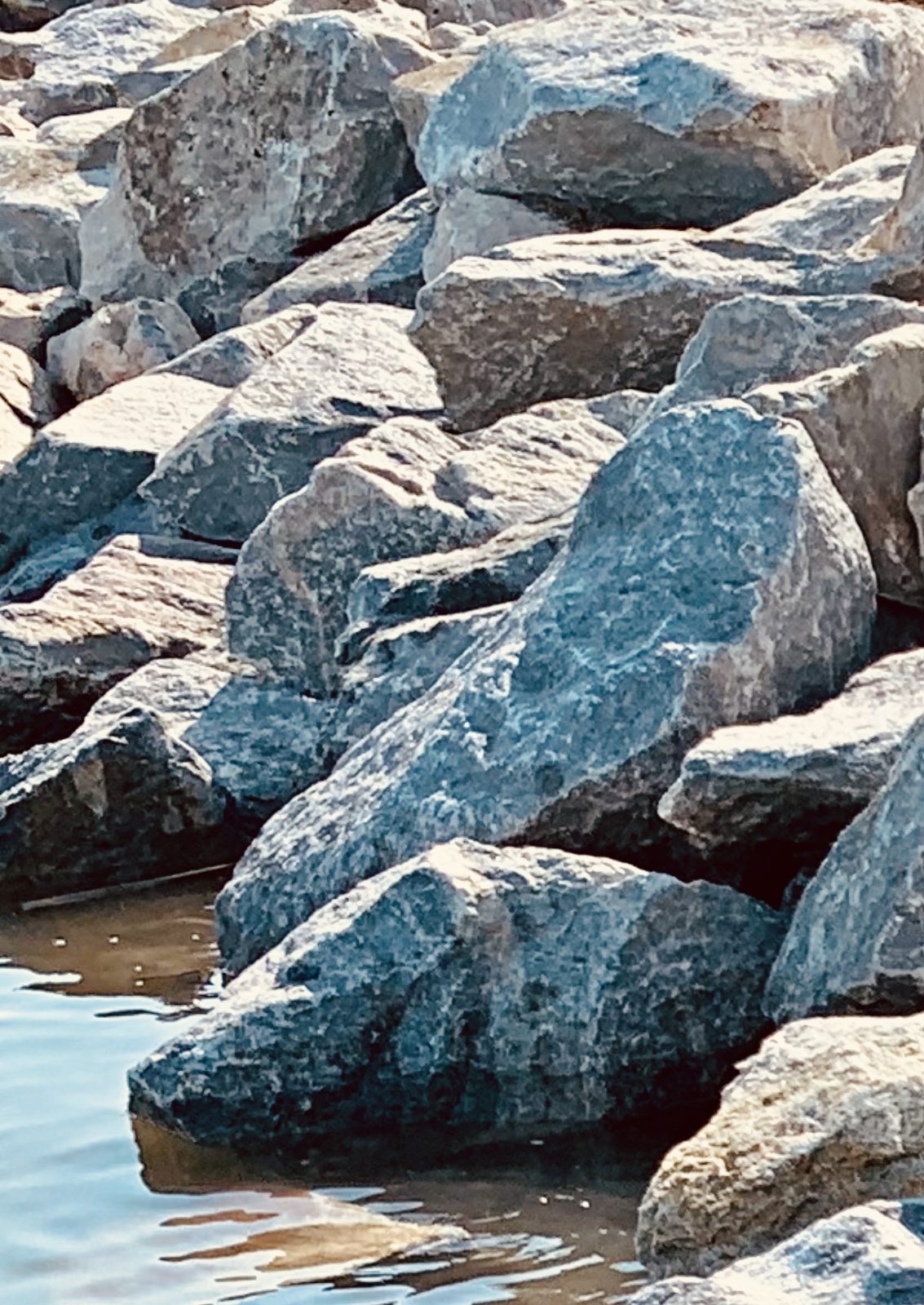
We use DelDOT-rated rip-rap, typically from R-4 for lighter use through R-7 for heavier exposure, selected by the conditions at your site.
Proven installation practices
- Site preparation. The shoreline is prepared and graded to receive the stone.
- Filtration. Filter fabric keeps the soil behind the stone from washing out through it.
- Base and bedding. Fill and bedding stone where the design calls for them.
- Stone selection and placement. The right class of stone, placed to grade.
Rip-rap or a bulkhead?
Where there is room to slope the shoreline, rip-rap can be a relevant alternative to a bulkhead. Where the site needs a vertical wall to retain soil, it generally needs a bulkhead. Stone set offshore rather than against the bank is covered under Erosion Control.
Materials
What goes into it.
| Layer | Typical material |
|---|---|
| Armor stone | DelDOT-rated rip-rap — typically R-4 for lighter use through R-7 for heavier exposure |
| Filtration | M300 filter fabric |
| Base and bedding | DelDOT Select Fill and DelDOT #57 Stone |
Pricing
Where it starts — and why there’s no useful upper number.
Stone class, quantity, grading, access and exposure vary so much between shorelines that a universal upper range would only mislead.
Where pricing starts
Planning benchmarks, not quotations. Running-foot figures assume roughly 100 linear feet of work; shorter jobs can cost materially more per foot because mobilization and other fixed costs are spread over less work. Your price depends on dimensions, height and grade, piling, materials, soil and water conditions, access, permitting, specifications, equipment and mobilization, and scope.
FAQs
Questions we get about this.
What size stone will my shoreline need?
It depends on the exposure. We use DelDOT-rated rip-rap, typically from R-4 for lighter use through R-7 for heavier exposure, and select the class from the conditions at your site.
Is rip-rap an alternative to a bulkhead?
Sometimes. Where there is room to slope the shoreline, a revetment can be a relevant alternative. Where the site needs a vertical wall to retain soil, it generally needs a bulkhead.
What affects the cost of rip-rap?
Stone class and quantity, length and height of the shoreline, grading, filtration and bedding, access for equipment and stone delivery, permitting and scope. Small or basic revetments start around $175 per running foot for roughly 100 linear feet of work; shorter jobs can cost materially more per foot.
Related
Often part of the same job.
Erosion Control
Offshore rip-rap sills that take wave energy out of the water before it reaches the land.
Read moreLiving Shorelines
A site-specific, nature-based approach to holding a shoreline — planted, built and monitored until it establishes.
Read moreBulkheads & Retaining Walls
Timber and vinyl walls that retain soil at the water’s edge, and retaining walls that hold grade further back.
Read moreProfessional Evaluations & Assessments
A standardized condition evaluation of piers, docks, bulkheads, piling and shoreline — scored and graded A–F.
Read moreGet started
Send us a photo of your waterfront.
Tell us what the water is doing and what you want out of the property. We’ll evaluate the site, give you a detailed estimate covering scope, materials, timeline and price, and handle the permitting. Commercial, municipal and agency inquiries reach the same phone.
Or send a photo straight from the inquiry form — it takes file uploads.
- Call(888) 519-2253
- Emailadmin@hastingsmarineconstruction.com
- Shop10372 Old Furnace Rd
Seaford, DE 19973 - Office hoursMonday – Friday, 8:00 AM – 5:00 PM
Closed Saturday & Sunday