
Shoreline Protection
Living Shorelines
A site-specific, nature-based approach to holding a shoreline — planted, built and monitored until it establishes.
“I want the shoreline held without walling off the water.”
In 1996 Bart Hastings worked closely with Delaware’s DNREC to test and develop new methods of shoreline stabilization and erosion control as alternatives to bulkheading and rip-rap. That work helped set the standard for living shoreline projects in Delaware.
Three decades of that experience later, it is the reason a living shoreline is a real option here and not just a brochure line.
What a living shoreline is
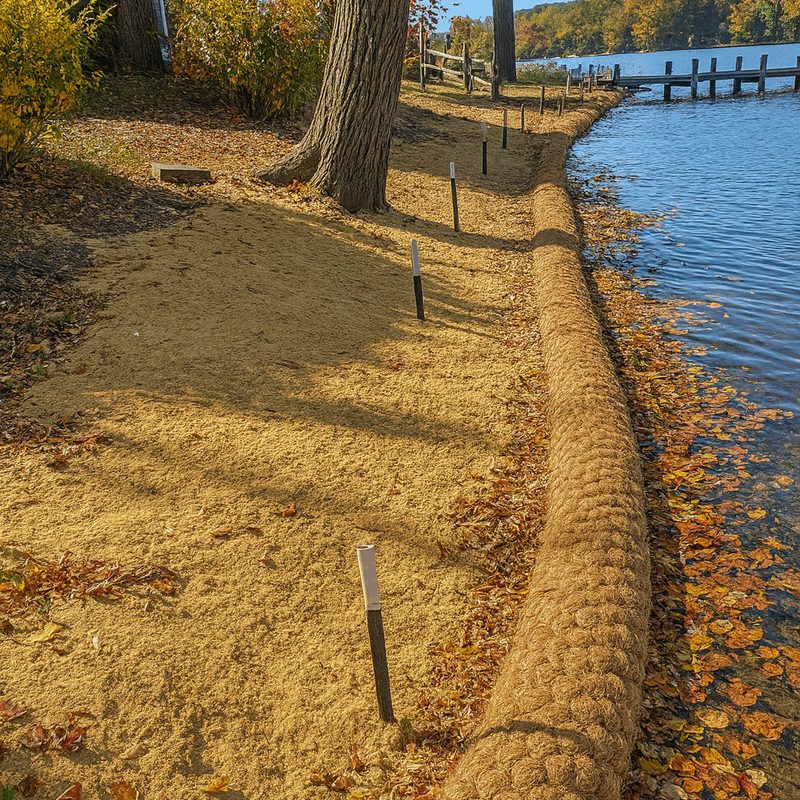
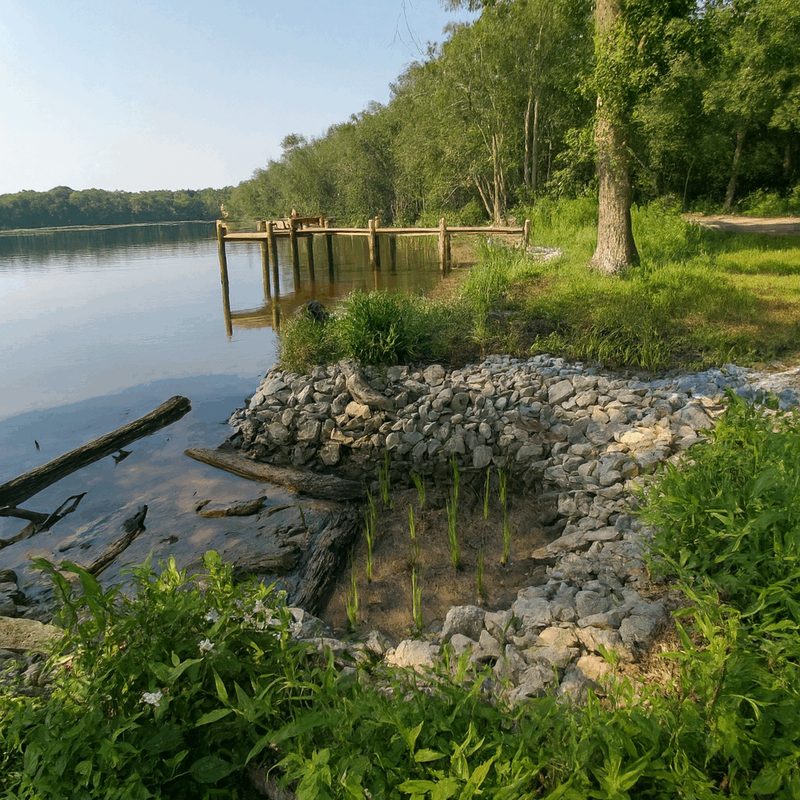
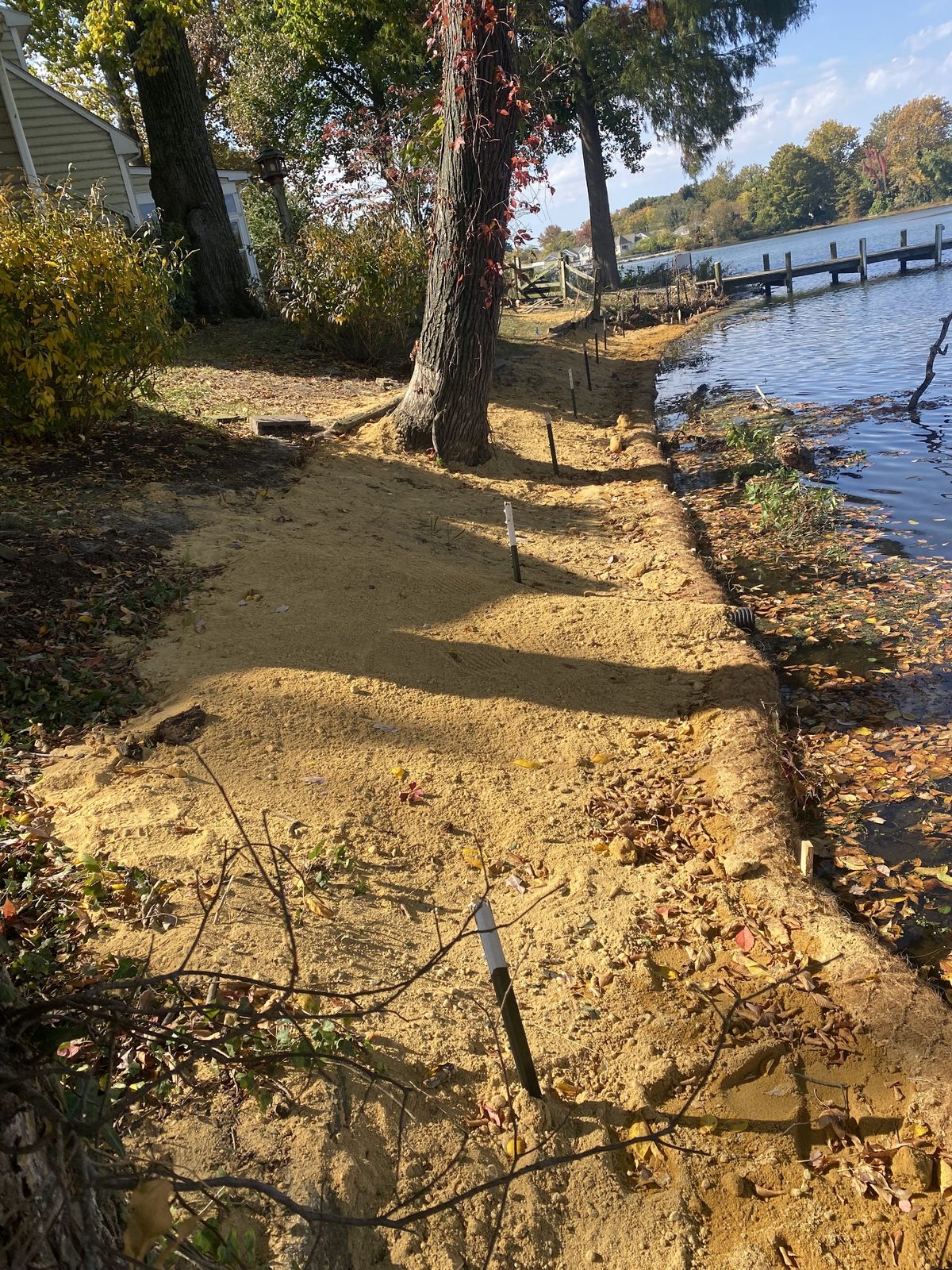
A nature-based approach to stabilizing a shoreline that uses native vegetation, strategically placed stone and specialized erosion-control products. Plantings combined with stone sills, biodegradable mats and coir logs absorb wave energy, filter runoff and create habitat for fish, crabs and birds.
How it works
Instead of reflecting wave energy the way a hard wall can, a living shoreline absorbs and dissipates it while still allowing natural sediment movement. As the vegetation establishes, its roots help hold the shoreline.
Where it fits — and where it doesn’t
A living shoreline is a site-specific approach, not a universal one. It is generally not suited to steep or sharply defined banks that need significant soil retention — those usually call for a structural answer such as a bulkhead or rip-rap. On the right site, and sometimes with an offshore sill reducing wave energy in front of it, it is an excellent one.
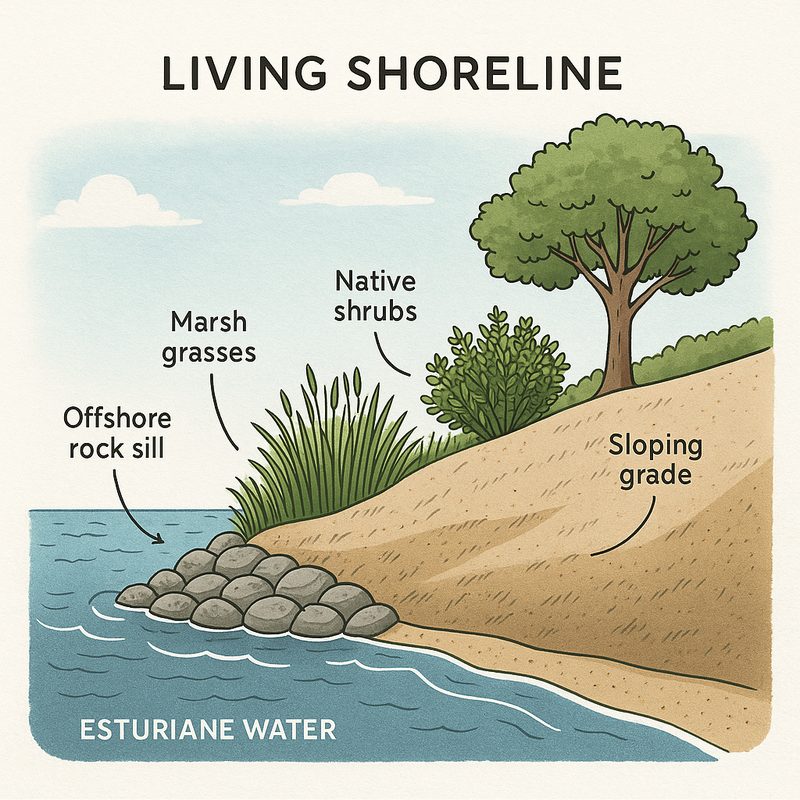
How it fits together
From the water up.
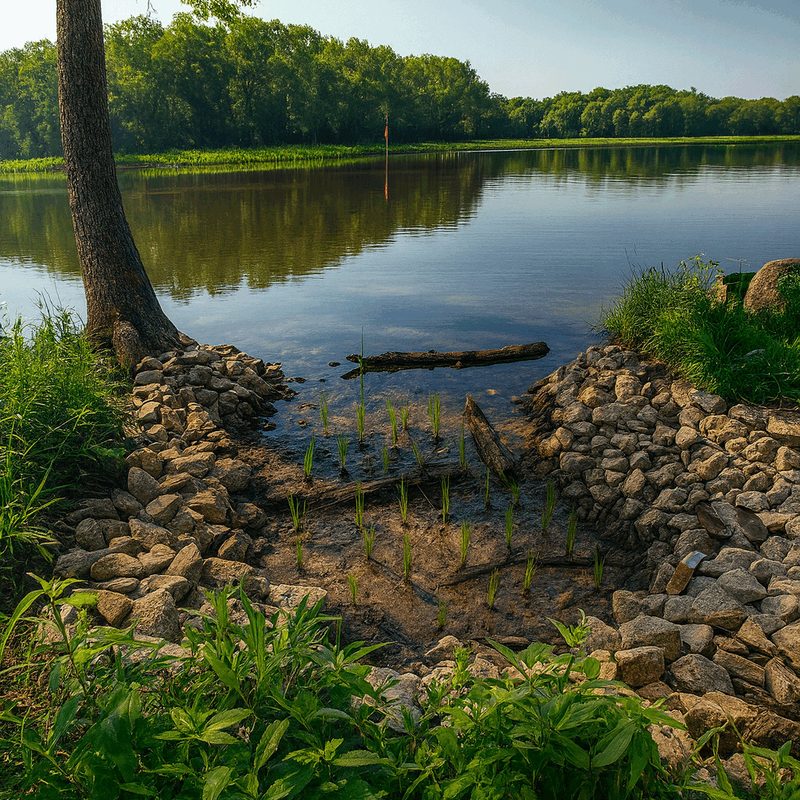
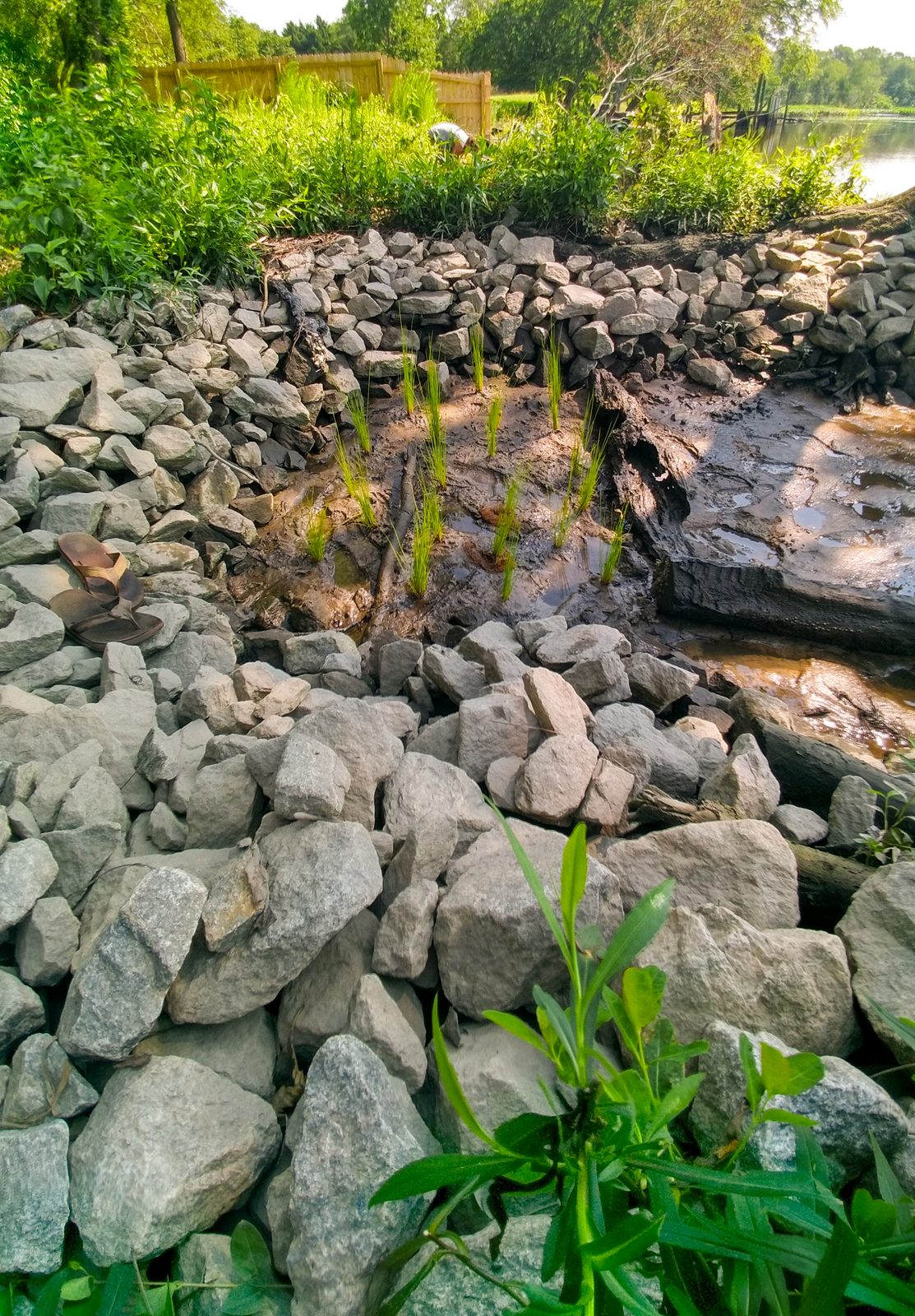
- Offshore rock sill — stone set out in the water that takes energy out of incoming waves.
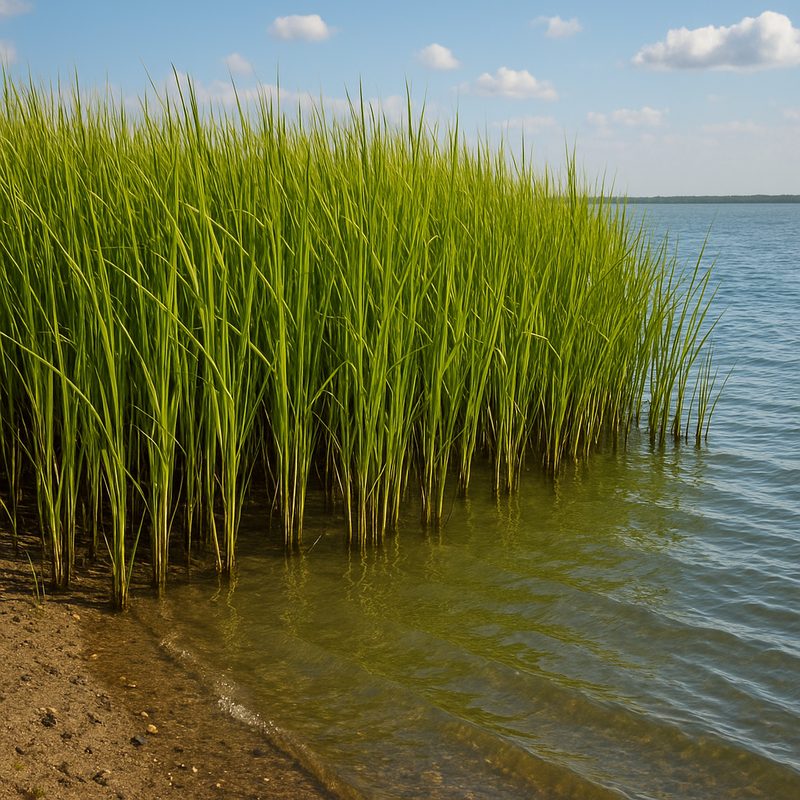
- Marsh grasses — planted in the sheltered zone behind the sill, where their roots bind the soil.
- Native shrubs — higher up the shoreline, holding the upper bank.
- Sloping grade — a gentle profile the plants can establish on, rather than a hard edge.
After the crew leaves
How establishment is monitored.
A planted shoreline is not finished the day construction ends. It is finished when the vegetation has established — so we measure it.
- Measure plant coverage. Success is monitored by vegetation coverage per square foot across the planted area.
- Observe establishment and growth. Coverage is checked over time, so we can see where the planting is taking and where it isn’t.
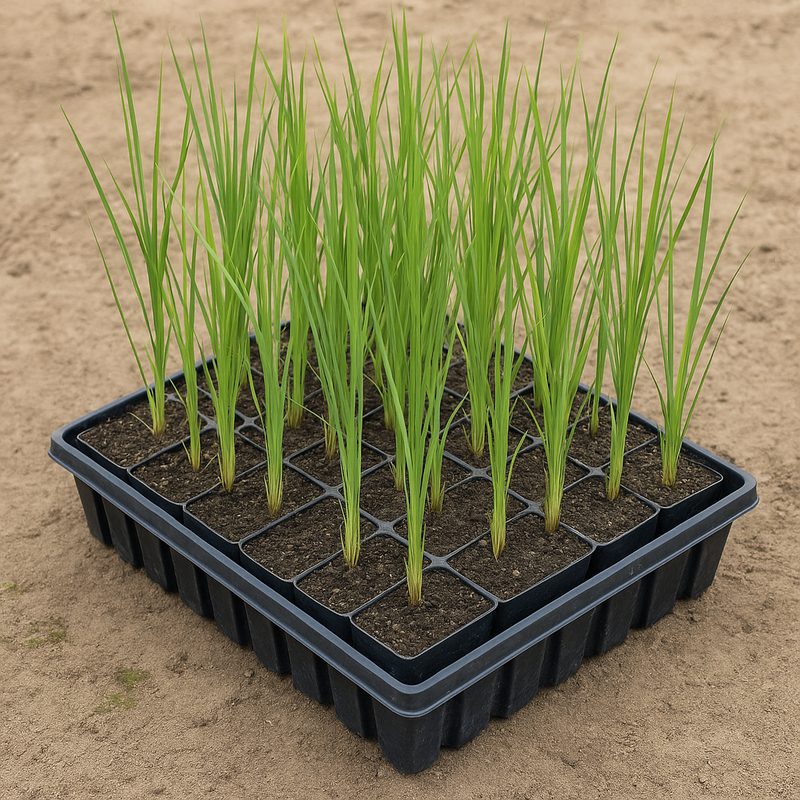
- Plant where it’s needed. Supplemental planting goes in based on the establishment and growth we observe.
On the water
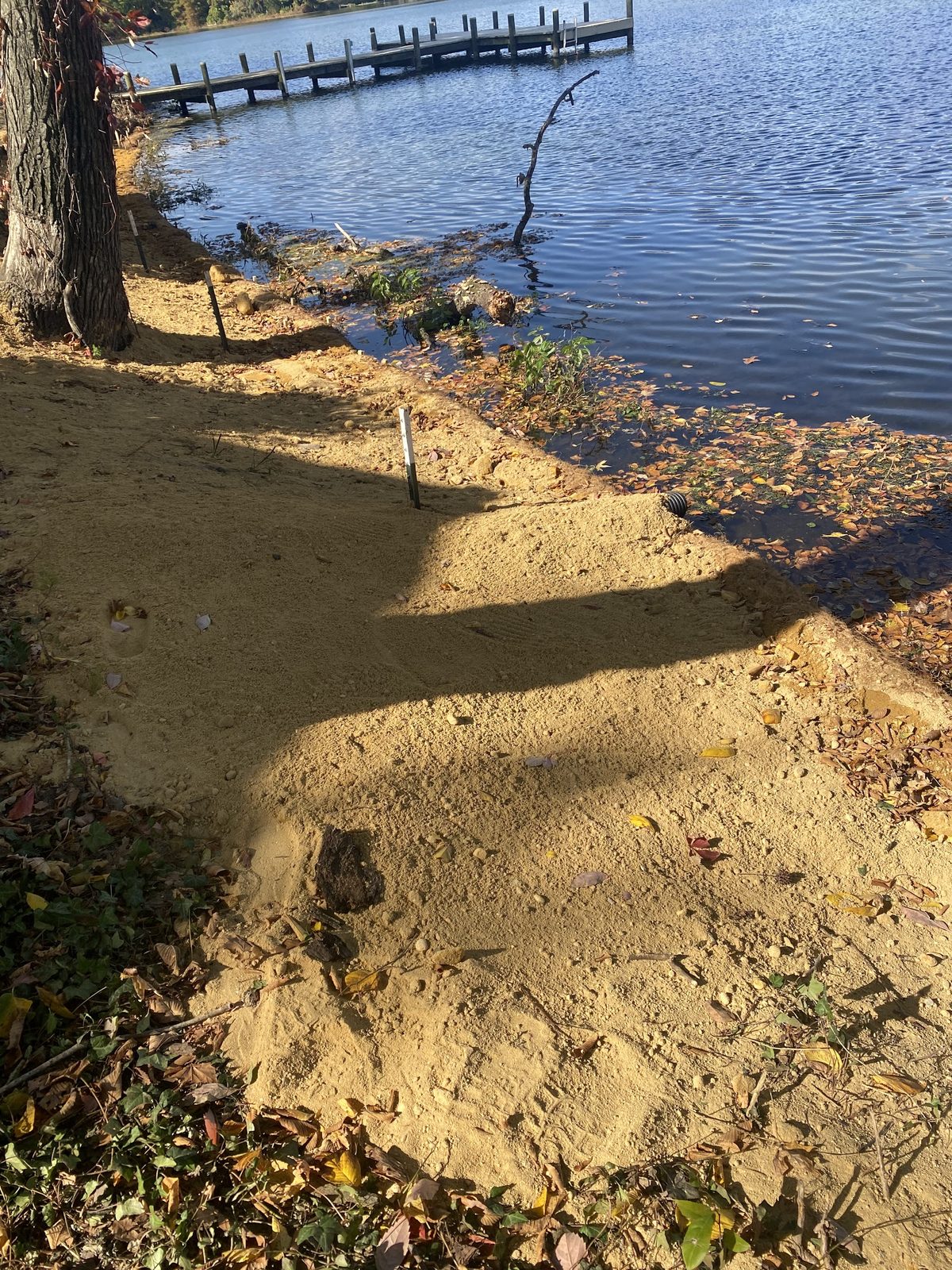
Living shorelines we have built.
FAQs
Questions we get about this.
How is living-shoreline establishment monitored?
By vegetation coverage per square foot across the planted area, observed over time. Where establishment and growth fall short, supplemental planting goes in.
Can a living shoreline replace my bulkhead?
Not as a rule. A living shoreline is site-specific and is generally not suited to steep or defined banks that need significant soil retention. Where the site needs a wall to retain soil, it generally needs a wall.
Is my shoreline a candidate?
It depends on slope, exposure, soil and the regulations that apply. Send us a photo or book a site visit and we will tell you plainly.
Related
Often part of the same job.
Erosion Control
Offshore rip-rap sills that take wave energy out of the water before it reaches the land.
Read moreRip-Rap
DelDOT-rated stone revetments, sized to the exposure and placed over proper filtration and bedding.
Read moreShoreline Protection
Rip-rap, living shorelines and offshore erosion control — chosen by what the water is doing at your site.
Read moreGet started
Send us a photo of your waterfront.
Tell us what the water is doing and what you want out of the property. We’ll evaluate the site, give you a detailed estimate covering scope, materials, timeline and price, and handle the permitting. Commercial, municipal and agency inquiries reach the same phone.
Or send a photo straight from the inquiry form — it takes file uploads.
- Call(888) 519-2253
- Emailadmin@hastingsmarineconstruction.com
- Shop10372 Old Furnace Rd
Seaford, DE 19973 - Office hoursMonday – Friday, 8:00 AM – 5:00 PM
Closed Saturday & Sunday