
2×6 CA-C pressure-treated wood
Our standard wood decking. We prefer the 2×6 because its width-to-thickness ratio resists cupping and curling.
- Fasteners
- In freshwater settings, epoxy-coated or 316 stainless steel
Residential · Marine Construction
Fixed piers, docks and floating docks across Delmarva’s waterways — rivers, bays, canals, lakes, ponds and every waterfront setting in between.
“We’re on the water and we still can’t get to it.”
A pier or dock is the part of a waterfront property people actually use — and the part that takes the most abuse from tide, ice, wake and foot traffic. We have been building and rebuilding them across Delmarva’s waterways since 1980.
As your dock builder, we handle every phase: site assessment, design, permitting and construction. Water depth, bottom conditions, exposure and access for equipment decide most of the design, so all of it gets looked at on site before anything is quoted.
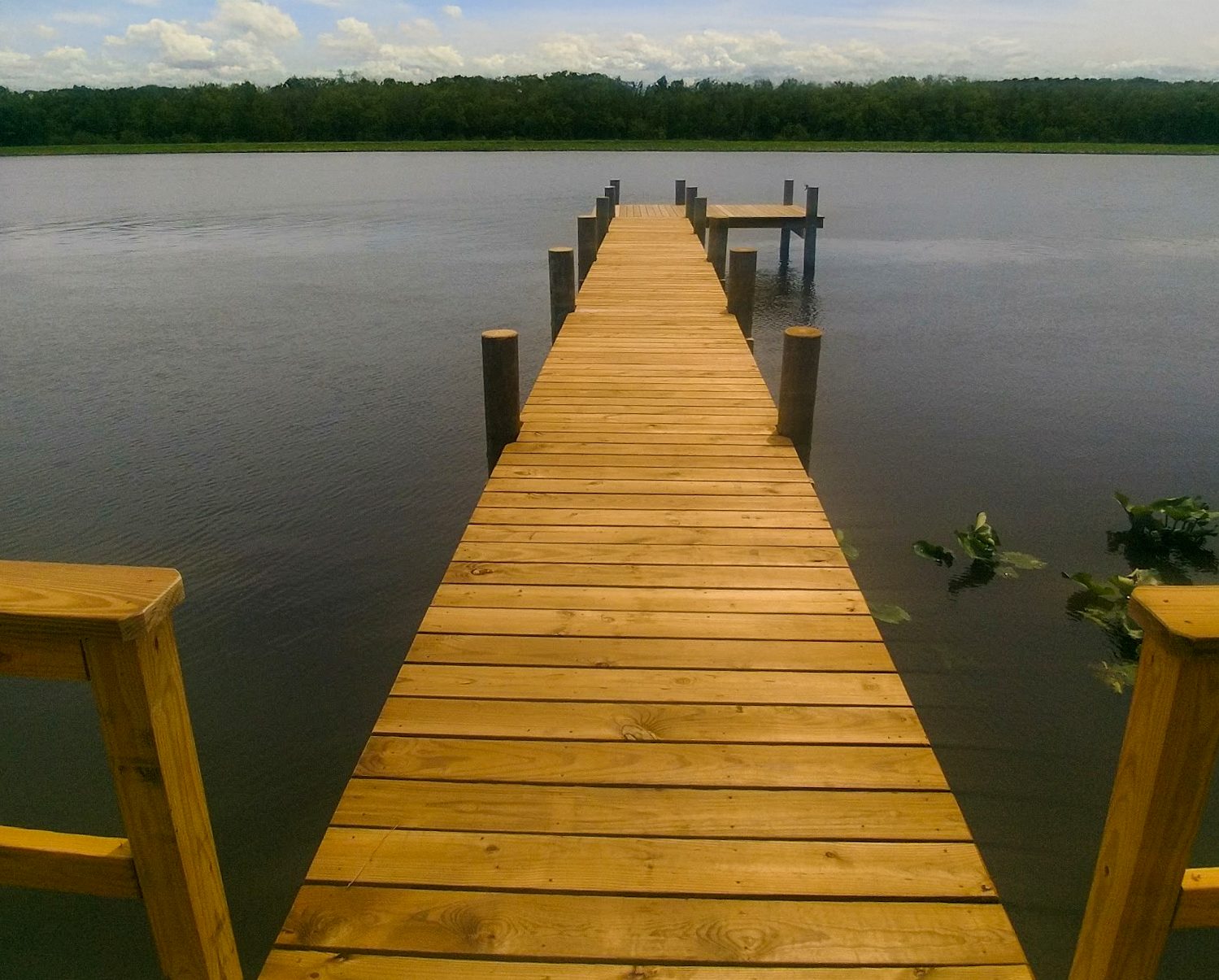
People use the words interchangeably, but they mean different things. A pier is a fixed access structure that extends from upland property out over the water. A dock is the facility — or the portion of a structure — intended primarily for vessel access and mooring. Most waterfront projects include both: a pier to get you out over the water, and a dock where the boat ties up.
We design around the site rather than a catalog: water depth at low water, how far out you need to reach, the boat you have now and the one you might have later, and whether a place to launch a kayak or sit at seven in the evening matters as much as a slip.
Not every tired-looking pier needs replacing. We assess what is actually there — piling condition below the waterline, framing, fasteners, decking — and tell you whether it is a structural repair, a partial rebuild or a full replacement. If a repair will serve you just as well, we will say so. For a documented, graded assessment, see Professional Evaluations & Assessments.
On the same page, on purpose
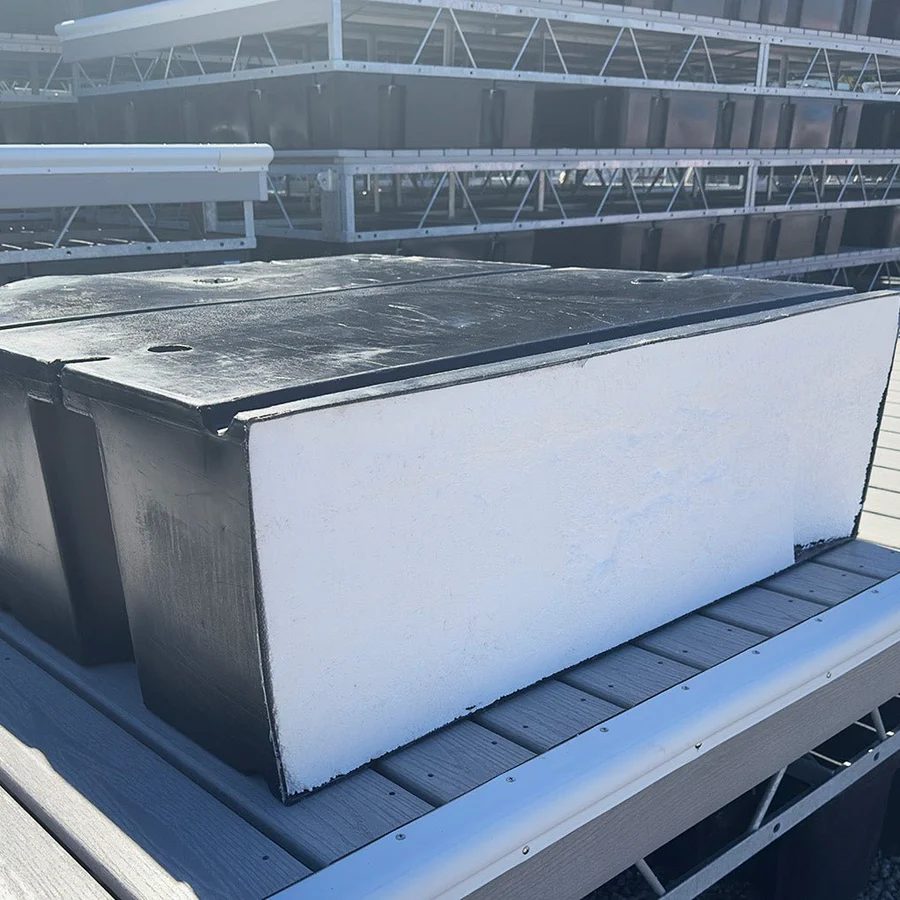
A floating dock rises and falls with changing water levels, so the deck stays at a consistent height above the water and a boat can tie up close alongside whatever the tide or the water level is doing.
Adequate water depth and bottom clearance. The floats have to stay clear of the bottom at the lowest water the site sees, with the load of the dock, the people on it and the boat alongside. That means a floating dock is not inherently suited to shallow water — a site that runs thin or dries out at low water is usually better served by a fixed pier and dock.
Floating dock installation and the renovation of existing floats work the same way. See the Lewes Canalfront Park float dock renovation.
How we build them
Typical residential pier and dock piling is 8-inch butt CCA marine pressure-treated Southern Yellow Pine, driven using pile-driving equipment appropriate to the site. Timber piling is tapered: the butt is the larger end and the tip the smaller, so an 8-inch butt pile measures eight inches across its larger end.
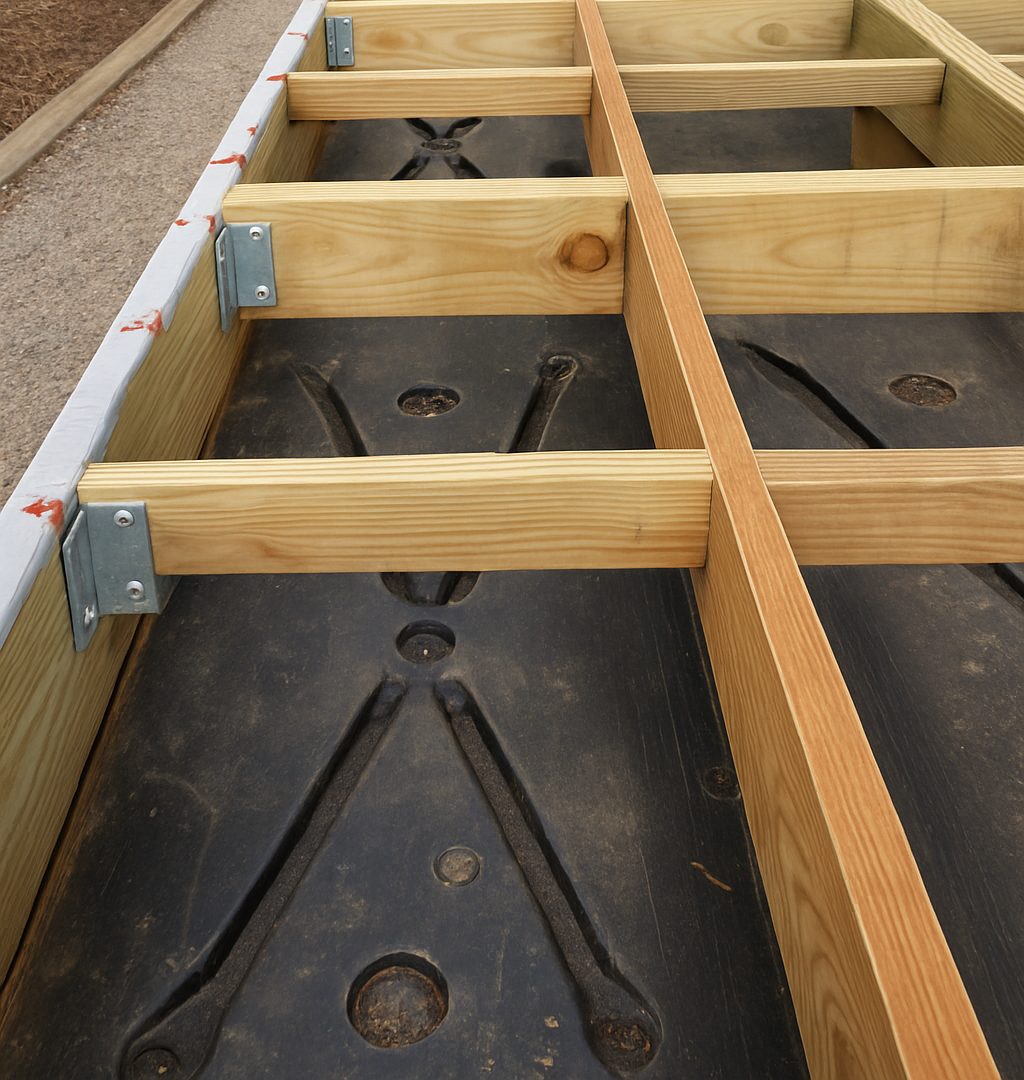
All structural framing is CCA-treated, with the retention selected for the exposure and the application. Saltwater piling is typically 2.5 CCA.
| Component | Typical residential standard |
|---|---|
| Piling | 8-inch butt CCA marine pressure-treated Southern Yellow Pine |
| Piling retention | Saltwater piling typically 2.5 CCA |
| Framing | All structural framing CCA-treated; retention selected for exposure and application |
| Cross caps | Bolted to piling; double cross caps at applicable joints |
| Stringers | Outside stringers bolted; stringers generally no more than 24 inches on center |
| Joints | Supported at cross-cap and piling locations |
Decking & fasteners
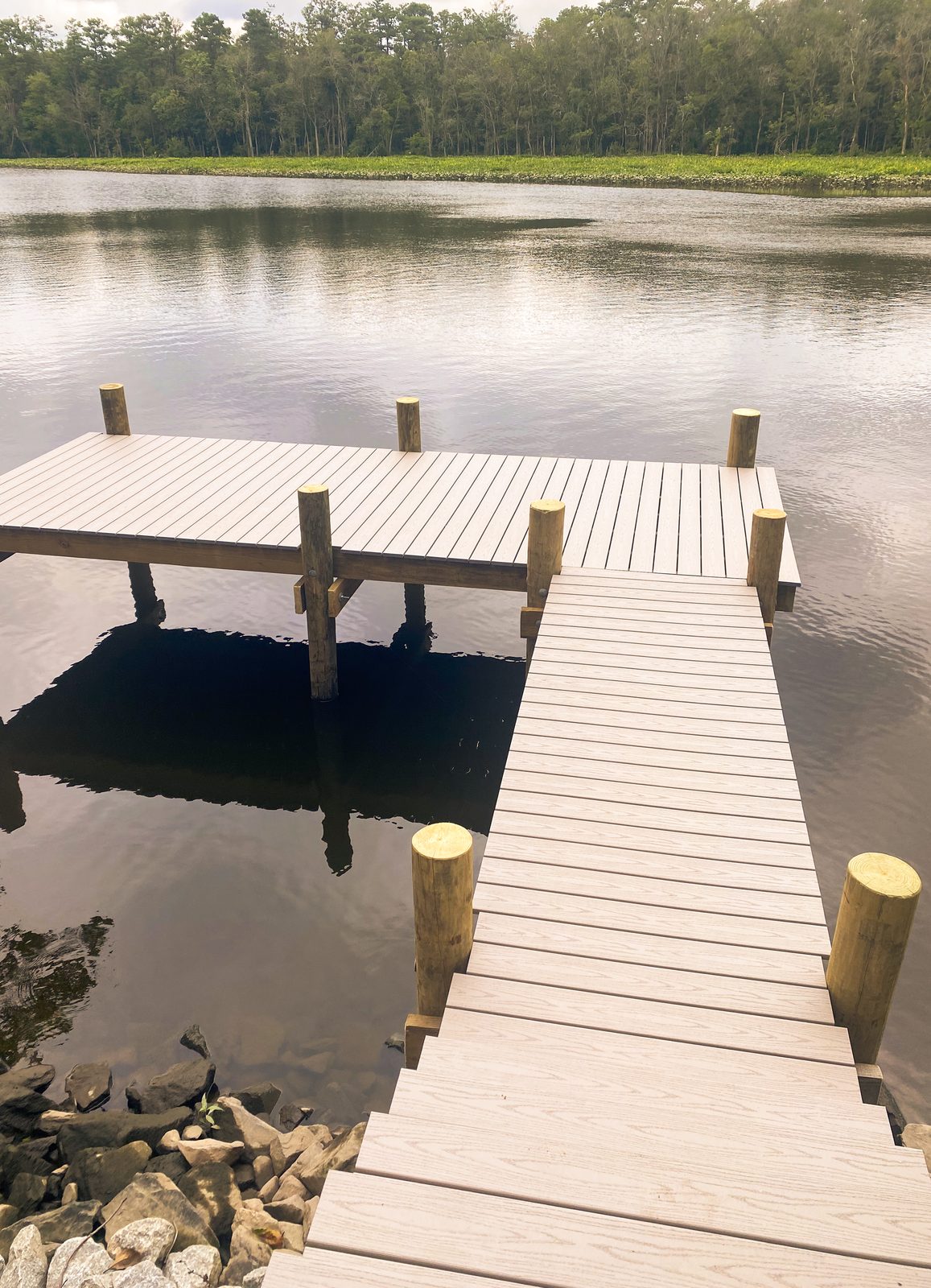
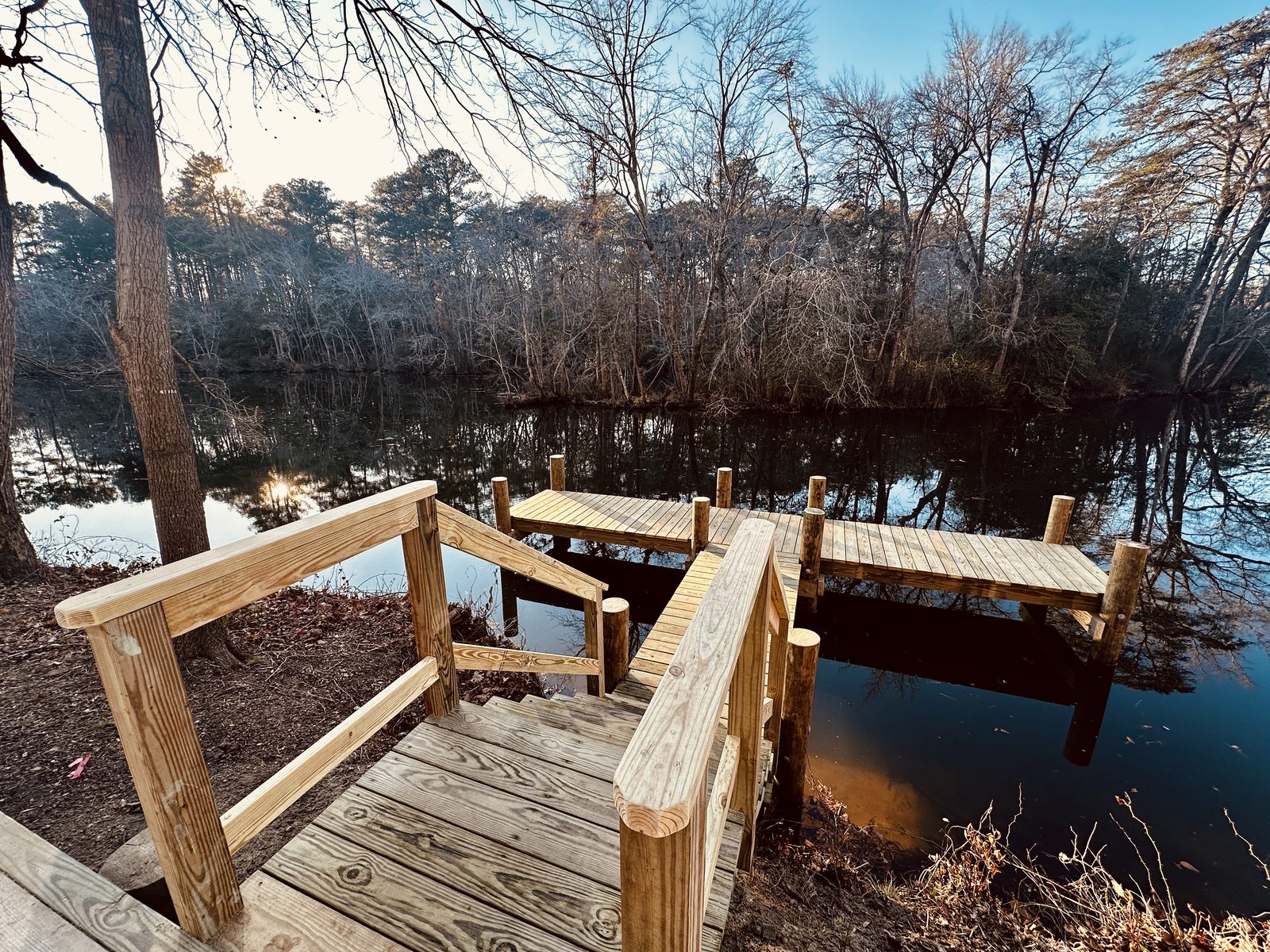
Our standard wood decking. We prefer the 2×6 because its width-to-thickness ratio resists cupping and curling.
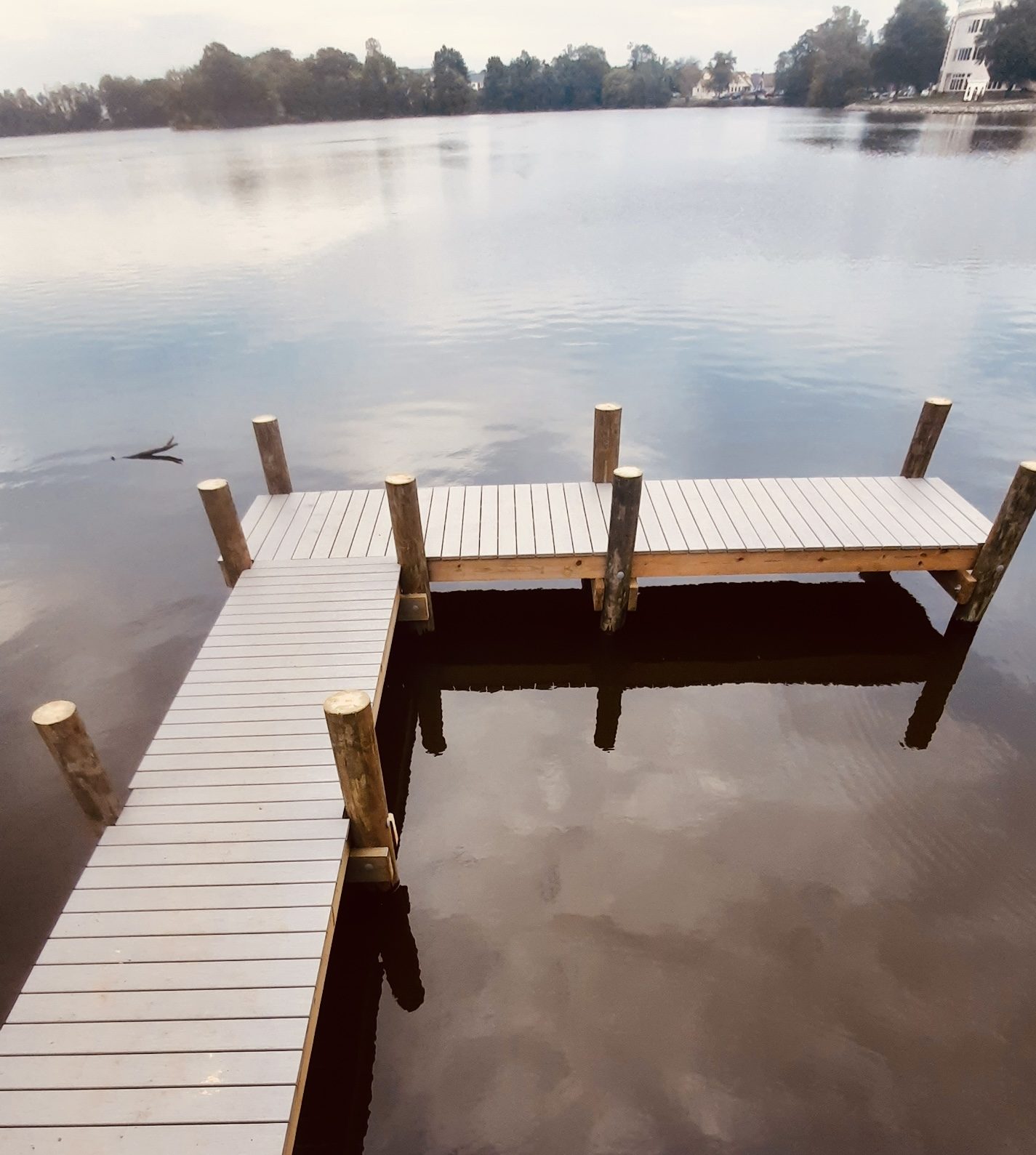
Solid PVC deck boards — a synthetic decking with no wood content.
A fiberglass-reinforced composite decking — the material used on the Lewes Canalfront Park float dock.
Pricing
Nobody can price a pier properly without standing on the shoreline. This is where the conversation starts.
Where pricing starts
Planning benchmarks, not quotations. Running-foot figures assume roughly 100 linear feet of work; shorter jobs can cost materially more per foot because mobilization and other fixed costs are spread over less work. Your price depends on dimensions, height and grade, piling, materials, soil and water conditions, access, permitting, specifications, equipment and mobilization, and scope.
On the water
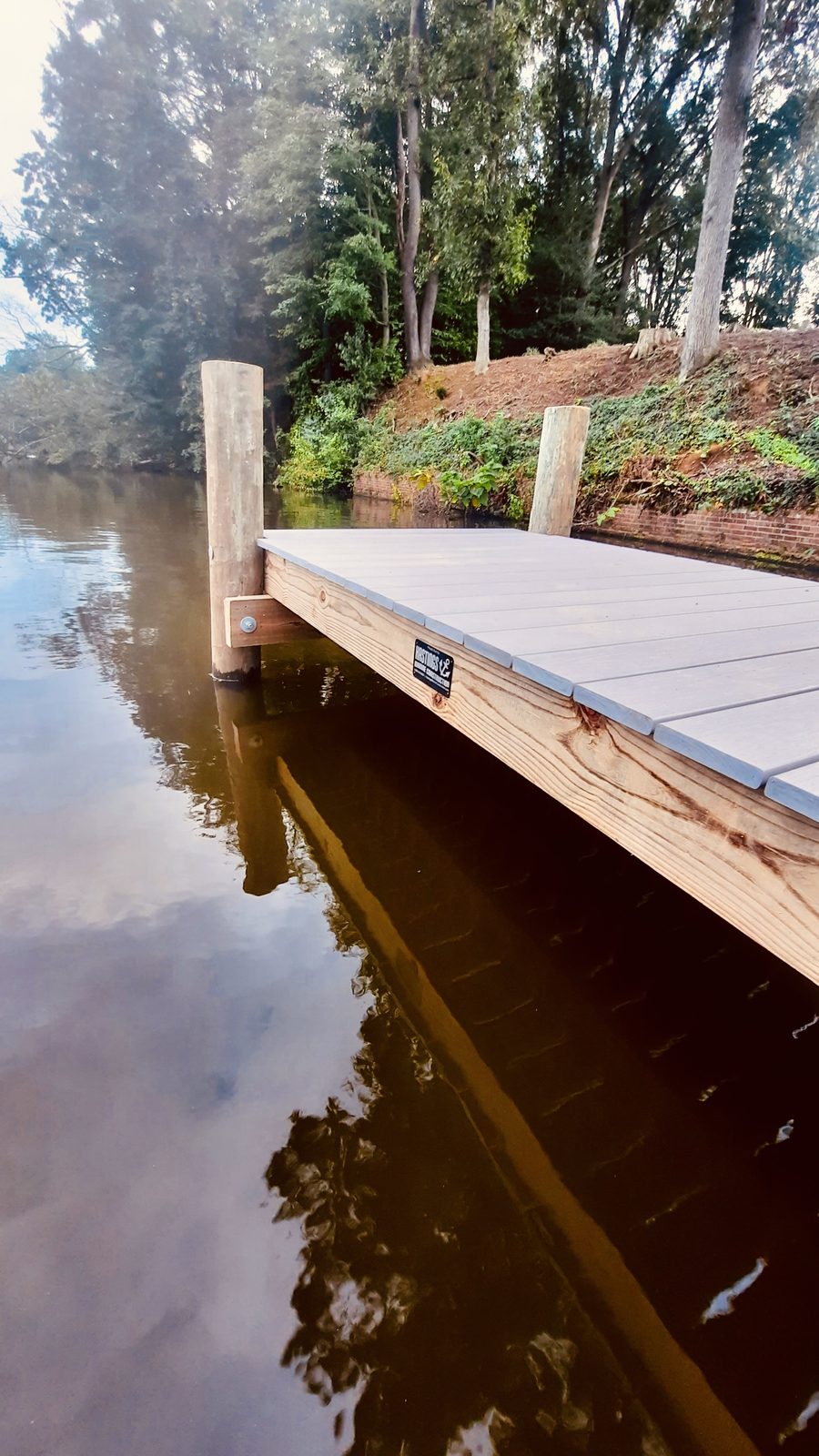
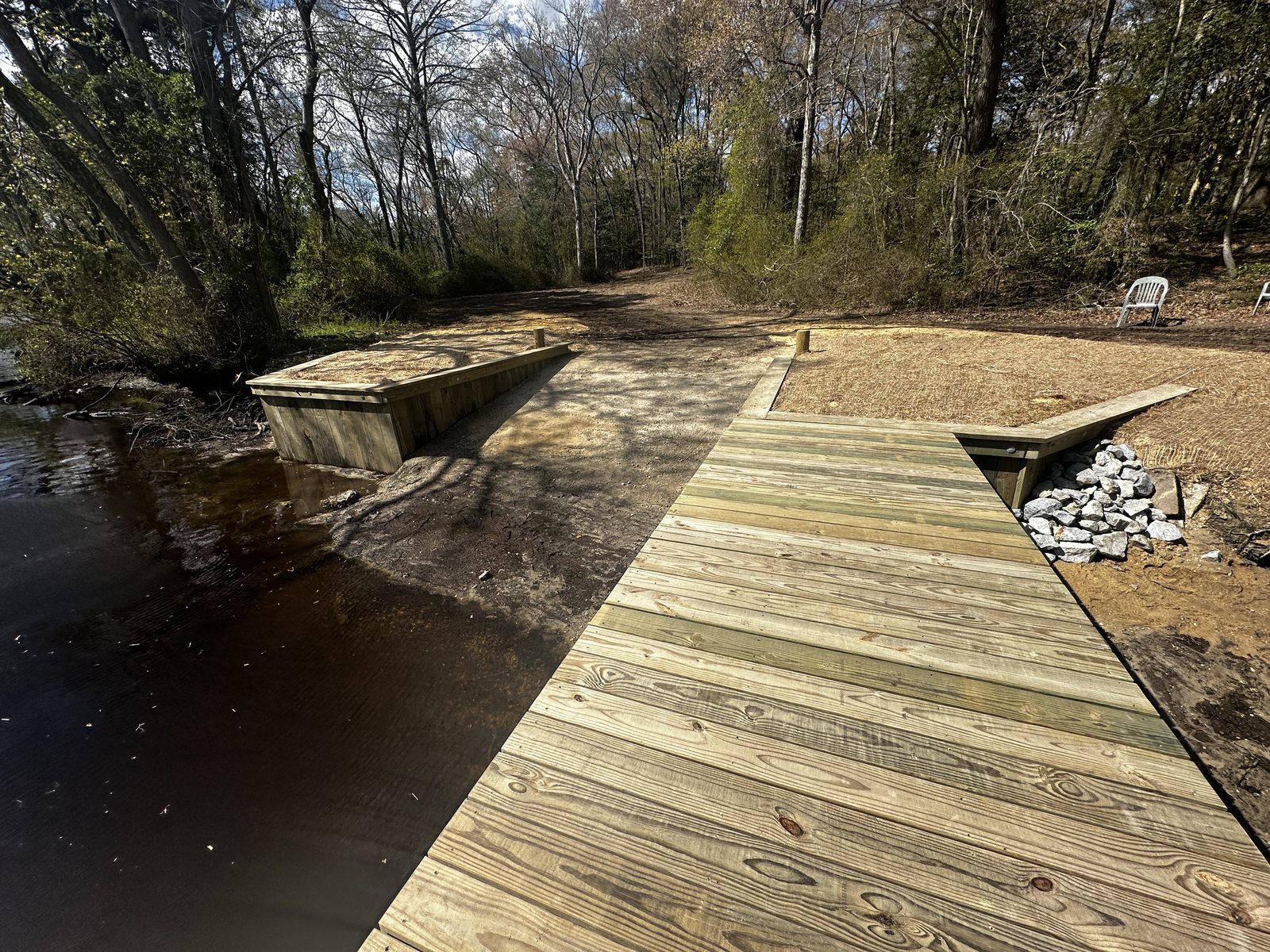
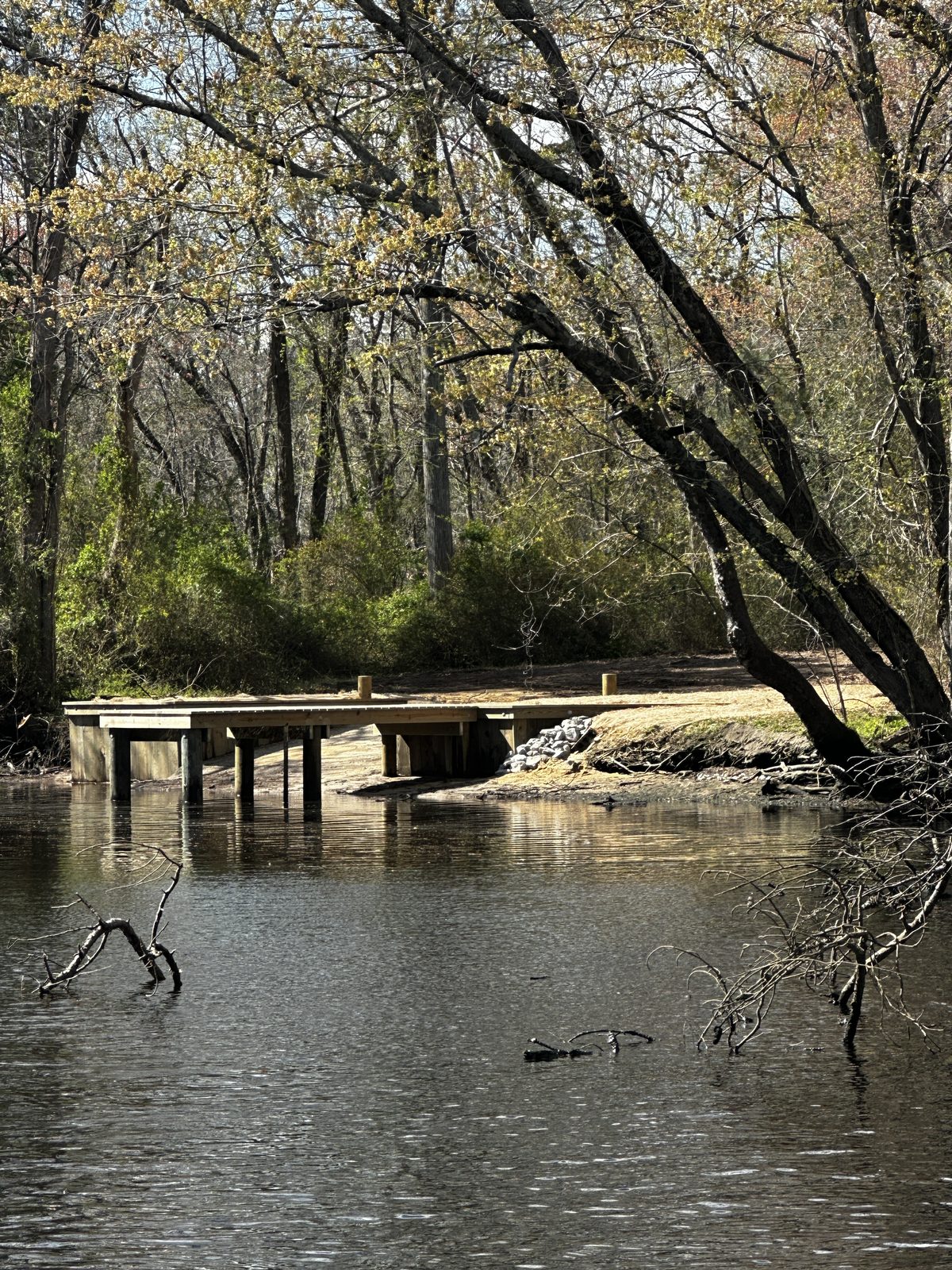
FAQs
A pier is a fixed access structure that extends from upland property out over the water. A dock is the facility, or the portion of a structure, intended primarily for vessel access and mooring. Most projects include both.
Because the floats must stay clear of the bottom at the lowest water the site sees, while carrying the dock, the people on it and the boat alongside. A floating dock is not inherently suited to shallow water; a site that runs thin at low water is usually better served by a fixed structure.
Timber piling is tapered. The butt is the larger end and the tip is the smaller end, so an 8-inch butt pile measures eight inches across its larger end.
Dimensions, water depth and bottom conditions, piling, materials and decking, access for equipment, permitting, specifications, mobilization and the overall scope. Piers and docks start around $400 per running foot for roughly 100 linear feet of work; shorter jobs can cost materially more per foot because fixed costs such as mobilization are spread over less work.
Related
Safe, solid access from the yard to the water across slopes, grade changes and bank heights of every kind.
Read moreTimber and vinyl walls that retain soil at the water’s edge, and retaining walls that hold grade further back.
Read moreDECO Boat Lifts, sold and installed by the DECO dealer for Delmarva — on piling sized for the lift.
Read moreYakPort and custom kayak launches, aluminum ladders, cleats, piling caps, fenders, rubrail and floating-dock accessories.
Read moreA standardized condition evaluation of piers, docks, bulkheads, piling and shoreline — scored and graded A–F.
Read moreGet started
Tell us what the water is doing and what you want out of the property. We’ll evaluate the site, give you a detailed estimate covering scope, materials, timeline and price, and handle the permitting. Commercial, municipal and agency inquiries reach the same phone.
Or send a photo straight from the inquiry form — it takes file uploads.